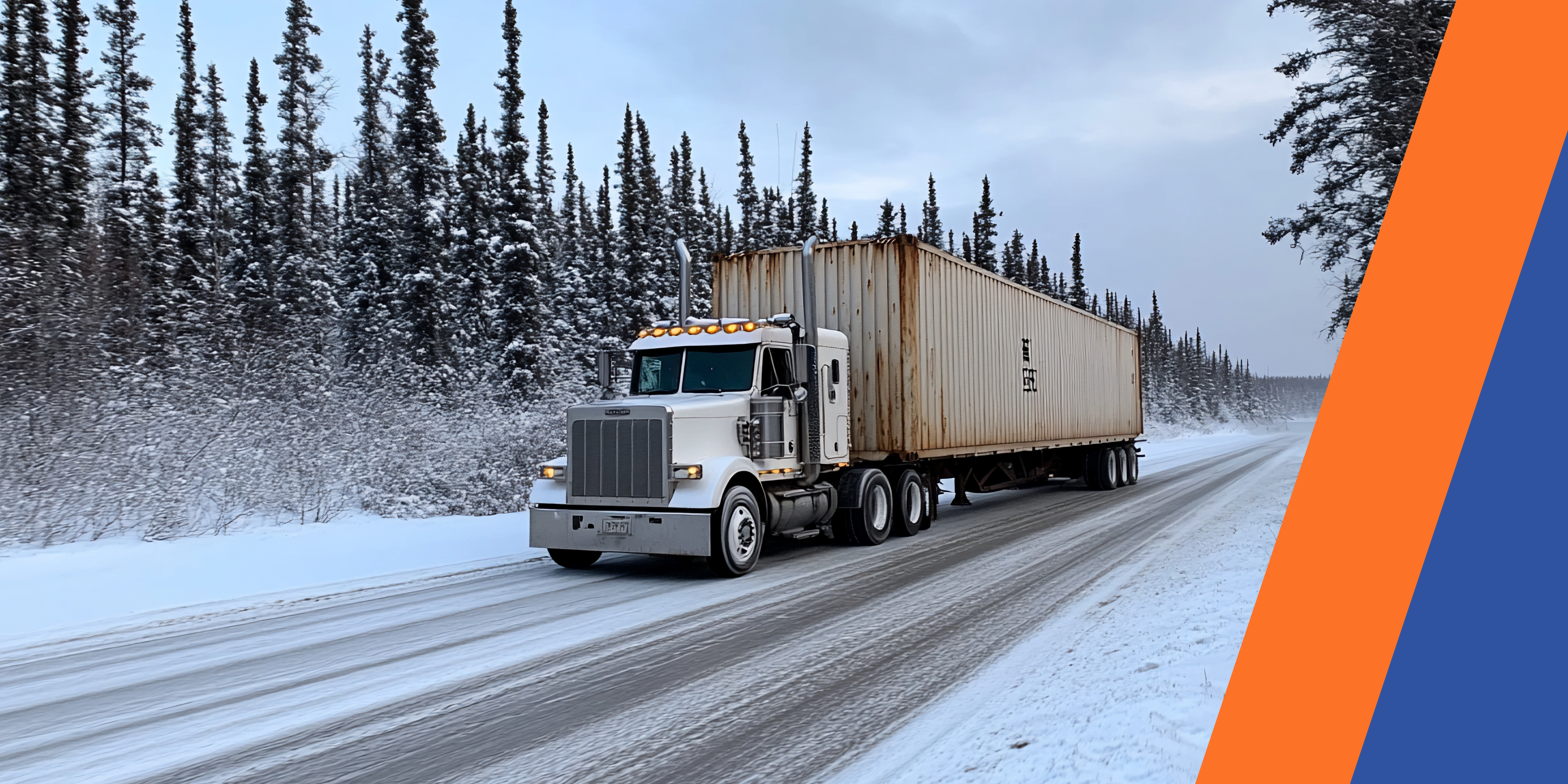

Holiday Freight + Winter Weather: Planning for the Real Challenge
The holiday season always brings urgency, tighter windows, higher volumes, and zero room for error. But for freight moving through northern U.S. states near the Canadian border, that pressure is compounded by the early arrival of winter weather. It’s not unusual for regions like Minnesota, Michigan, Wisconsin, North Dakota, Montana, and New York to face subzero temps and snow accumulation by mid-November, right when networks are already stretched.
And the impact isn’t limited to road conditions. In 2022 alone, multiple December storms cut average highway speeds across the upper Midwest by 30–50%, according to DOT data, while terminal operations in key intermodal hubs like Chicago and Buffalo saw equipment dwell increase by up to 48 hours. This isn’t just disruption, it’s compression. Less capacity is available, demand peaks, and there’s no slack in the system to absorb delay.
Carriers focus on consistent lanes. Warehouses hit maximum throughput. Appointment windows shrink, not expand. And when weather throws off even one link, it rarely stays isolated. A missed pickup in the north can lead to detention, failed transfers, and missed retail windows across the country days later.
Northern corridors feel it first because they rely on more than just trucks. Intermodal ramps, cross-docks, and drayage operations near the border are especially vulnerable to snow, equipment freezes, and yard congestion. Rail delays in places like Minneapolis or Toronto often ripple into networks serving Chicago, Dallas, or Atlanta within 72 hours.
The core issue isn’t the storm. It’s the lack of margin when it hits.
Experienced teams don’t just watch forecasts, they adjust cutoffs, reroute proactively, and reset service expectations early. When those steps are skipped, even routine weather can derail an entire week’s plan.
Another blind spot is outdated communication. Winter conditions change by the hour. A truck dispatched on a green-lighted lane at 8 AM may hit full stoppage by noon. If systems are relying on static data or overnight updates, teams lose the ability to respond in time and customers feel it. In peak season, silence is its own kind of failure.
The networks that navigate this season best aren’t the fastest, they’re the most responsive. They know northern weather sets the pace for the rest of the network. And they plan accordingly.
Winter weather will always collide with peak season. The question isn’t whether delays will happen, it’s whether your strategy is built to bend without breaking. Because once the pressure hits, preparation is the only edge that still holds up.